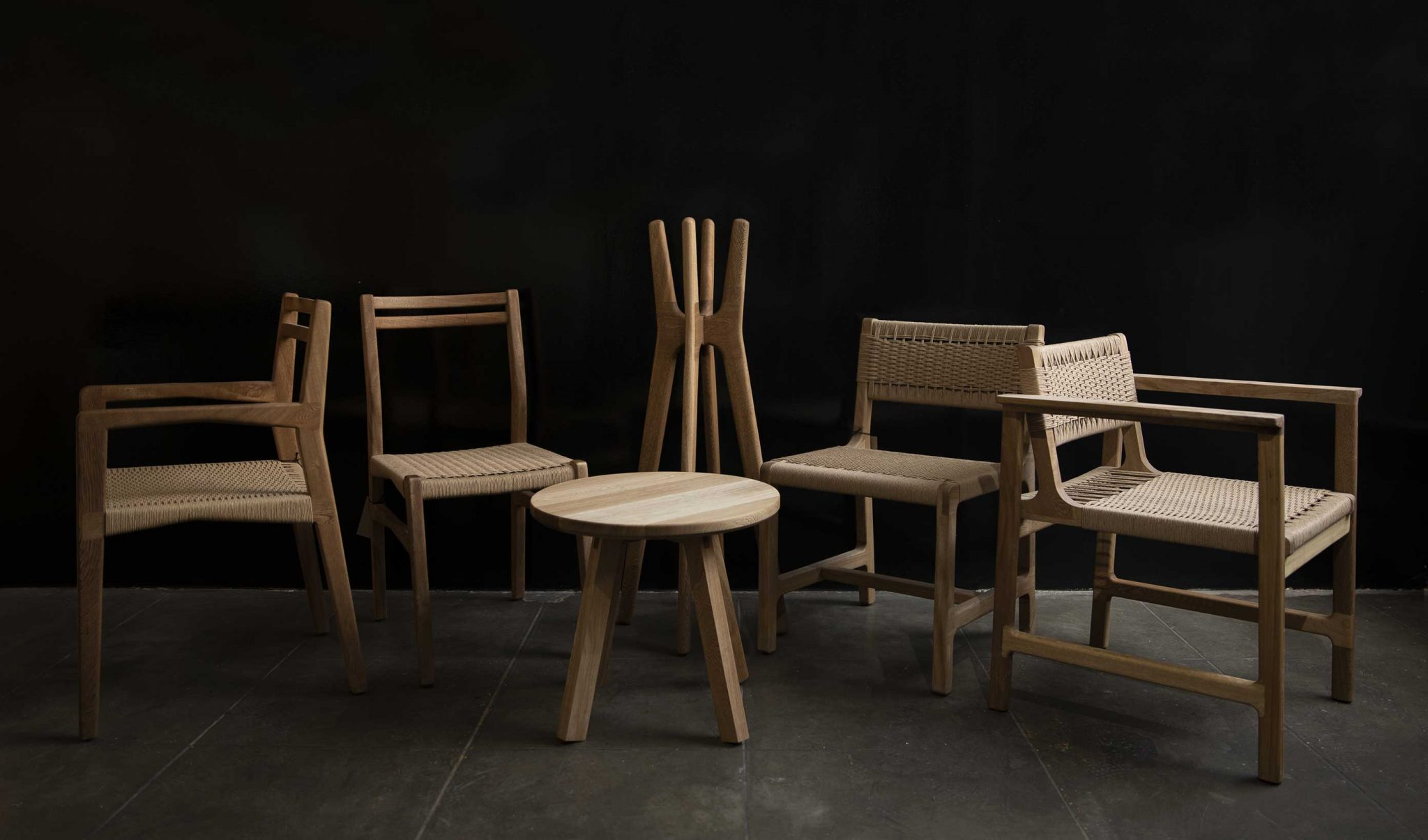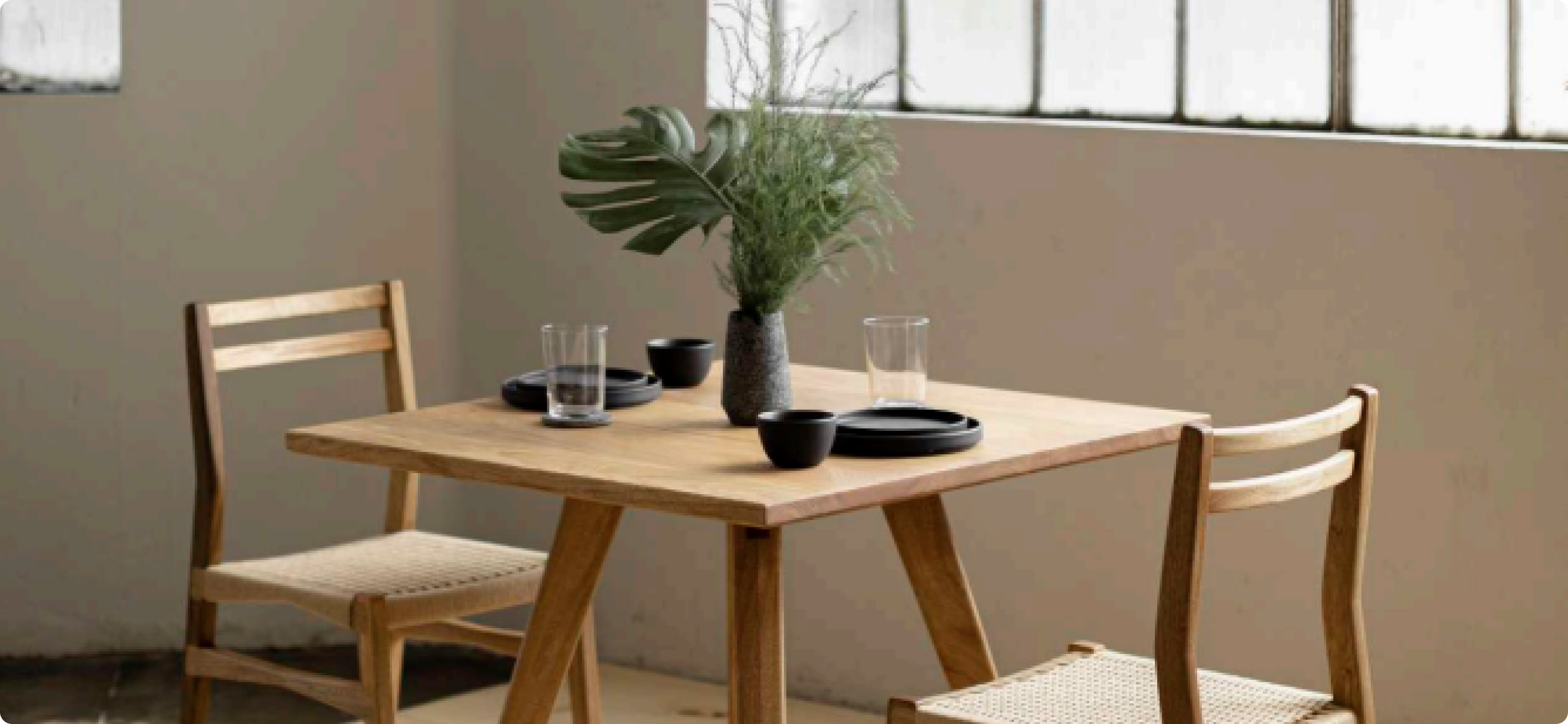
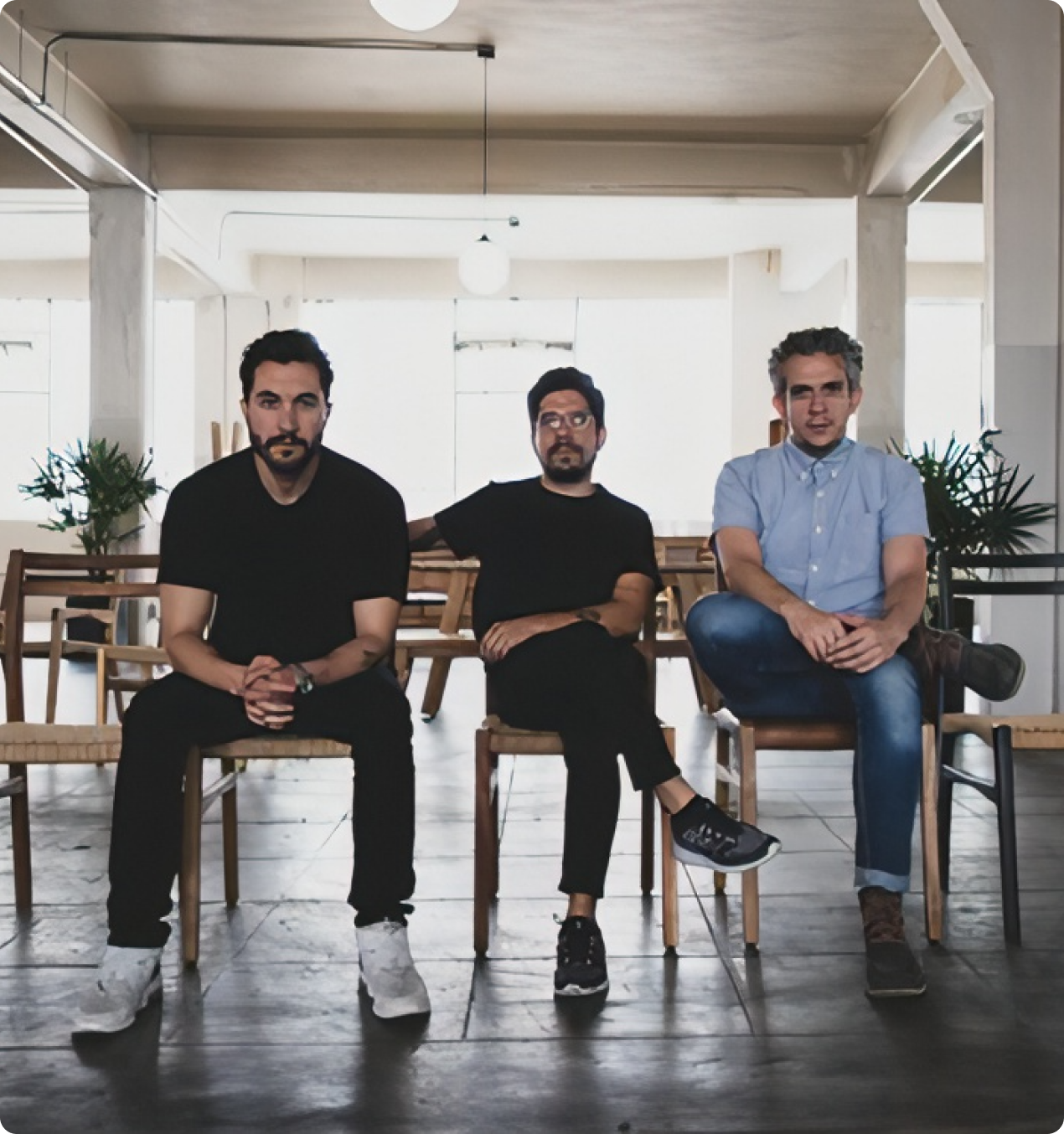
La Metropolitana is perhaps known mainly for its furniture. What were the studio's first projects?
We began doing a bit of everything — designing ephemeral spaces for different clients and events. We were very young but very bold. One of our first significant projects was the design of a museum — the Museum of the Army and Air Force, in Tlalpan — and then in 2012 a memorial for the soldiers who had lost their lives up to that point in the fight against organized crime. So that was our first big project, and it still exists — it's a public plaza on Reforma. We were fortunate: we put together a team of many very creative young people, who today are all over the place, contributing through architecture, art, and a lot of technology. From there we consolidated a larger office, invested in machinery, and decided to focus our efforts on developing our own product line. We were very interested in carpentry, and we held on to that.
Designing furniture had always been our interest, but we decided we didn't want to design furniture for someone else to manufacture — we wanted to make it ourselves. We were interested in innovating, not just repeating what was already being done. To do that we had to develop our own system, our own production infrastructure, train people. La Metropolitana's first employee joined in 2008 and is still with us — he's our head of finishes. Most of our staff joined between 2008 and 2013, and they have been specializing ever since. La Metropolitana is a shared effort.
La Metropolitana's Toca Madera initiative focuses on improving the quality of life of the team that produces your furniture. Where does the interest in social issues come from?
For us, that's perhaps the foundational topic, and it probably comes from our origin. Speaking for myself, from a very young age my parents taught me to respect everyone and to be empathetic. That upbringing gave me a window into a complex reality — that of the disadvantaged, people who throughout the history of our country have suffered abuses. So from a young age I connected with the idea that it is through service that one finds stability, purpose, and direction in life. That philosophy of service was naturally integrated into the company.
We understood that beyond the surface purpose — generating beauty or revenue — our deeper purpose has to do with the social. We believe that beauty cannot continue to arise from pain and inequality. Privilege can no longer be tied to abuse. We're fortunate to be doing something that makes us grow, makes us feel alive and useful, and that's the social side of Metropolitana.
In design terms, how would you describe La Metropolitana? What sources of inspiration do you find in Mexico's history and culture, and how have you translated them to a contemporary moment?
In Mexico, throughout our vast history, many things, lines, and flows have converged. What I feel is that genuinely Mexican design is something still being consolidated. Until very recently, what Mexico mostly did was import design, trends, and aesthetics, integrating them into a commercial setting — though there are of course other very ancient living lines. I imagine Mexican society and cultural fabric as a weave into which all of this culture and human richness keeps interlacing. Honestly, we never had an explicit intention to “rescue what's Mexican.” I feel our influence can be better understood from the rational hemisphere that emerged from the mid-19th century with the start of Arts & Crafts — where thought was integrated with industrial-process knowledge and a deep intent to innovate. That, I think, is the lineage of the design we make.
Our context — Mexico, its materials and traditions — is undoubtedly part of the final result. Yet Mexico had never been distinguished as a manufacturing power in carpentry, which is ultimately our focus. That's where our interest in innovation comes in: turning to history, understanding it, and opening new paths to the future.